Geology
 Virgin
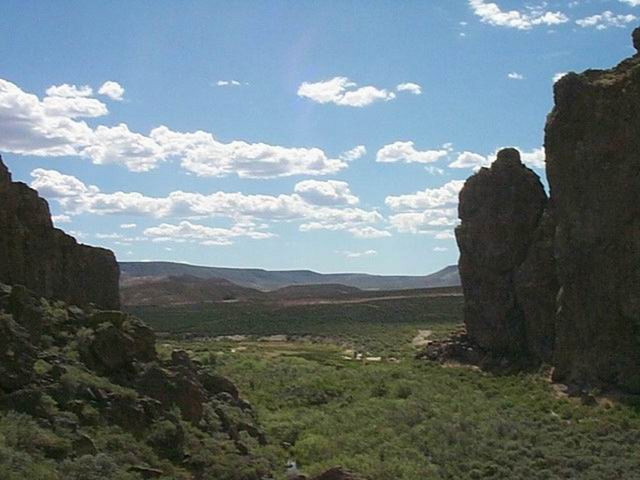
Valley is believed to have been
formed over 16 million years due to a series of rhyolite volcanic
flows. This created what is called the Canyon Rhyolite. It was a large
basin enclosed by low hills. Virgin
Valley is believed to have been
formed over 16 million years due to a series of rhyolite volcanic
flows. This created what is called the Canyon Rhyolite. It was a large
basin enclosed by low hills.
During
the following 1 1/2 million years the area underwent a series of
volcanic eruptions. The basin contained a succession of lakes and rich
forests which were periodically buried by this volcanic activity.
Canyon Rhyolite was slowly filled with layers of volcanic ash, lake
sediments, and debris from pyroclastic flows. Pyroclastic flows produce
a devastating effect on the land. Hot rock, ash and gasses are ejected
in an explosive eruption which can travel across the land at great
speed, wiping out and burying everything in it's path.
Over
time, a great lake formed in the area which deposited large amounts of
diatomite, a form of silica. This silica would someday contribute to
the formation of opal in the area. (Opal is cristobalite silica.)
The
basin continued to fill with sediments and volcanic ash. About 10
million years ago, a basaltic flow covered the area, capping the basin
and it's layers of ash and buried forests.
Over
time, hot ground water seeped through the layers of ash, picking up
silica rich deposits and permeated the buried wood. The carbon
molecules were slowly replaced by the hydrated silica creating perfect
opalized replicas of the original material. Occasionally, the silica
gel would form in pools which completely immersed the wood, preserving
it perfectly. Limb casts formed as the gel filled
the
cavities left by previously buried wood, long decomposed. Under the
right conditions, some of this opalized wood may develop into precious
opal. This requires a stable, quiet environment which allows the
cristobalite spheres to line up in formation. This unique alignment of
the hydrated silica molecules creates reflection and refraction as
white light passes through. This is the secret to the rainbow effect of
the precious opal.
The
entire area has been uplifted and eroded, exposing the opal deposits in
certain clay beds of ancient volcanic ash. The precious opal bearing
layers may be as much as 10-30 feet below the surface and range in
thickness from 2-12 feet. Common opal is abundant throughout the
successive layers of clay and ash, but only specific conditions produce
the spectacular play of color which characterizes the precious opal.
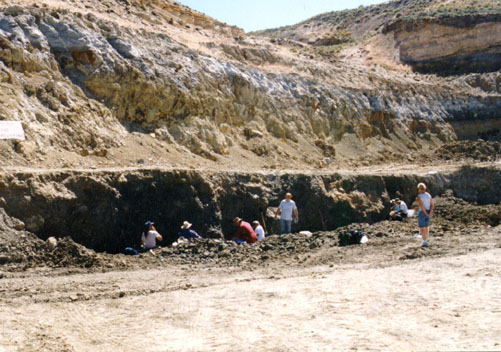
Note the layers of
volcanic ash which are clearly visible
above
the precious opal bearing layer being excavated.
|