|
Trip Tips
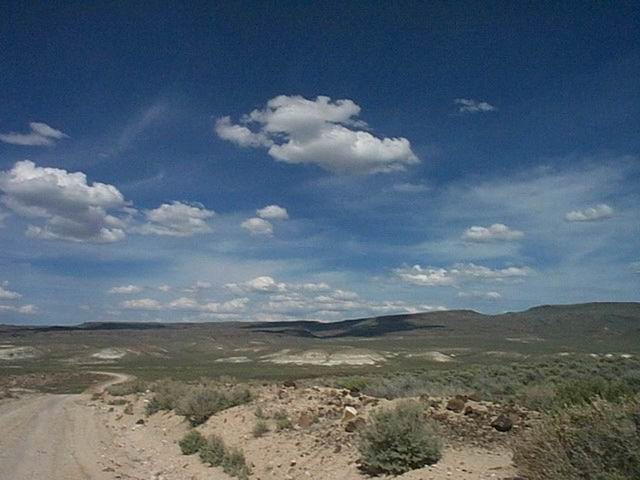
 When planning a
trip to Virgin Valley, prepare for
isolation. Bring everything you will need for your stay. Plan to pack
it out too. When planning a
trip to Virgin Valley, prepare for
isolation. Bring everything you will need for your stay. Plan to pack
it out too.
The
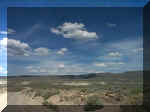
elevation is high, 5000 to 6000 feet. The air is clean
and the sky goes on forever. The stars at night are absolutely
spectacular. The elevation insures the nights will be very cold, even
in the summer. Pack plenty of warm clothes.
Daytime
temperatures are usually moderate, but can reach over 100o.
Light clothes for day are essential, but you will want to wear long
sleeves, long pants and a hat. The wind blows constantly in this arid
valley so you will need to bring chap stick and body lotion to keep
your skin moist.
 Virgin
Valley is a long way
from any kind
of services, so you will need to bring everything you will need for
your stay. You will drink more liquid than you expect to and will
probably eat less food than you expect. Potable water was
available at the free campground but it is highly mineralized and warm
from the ground. It is drinkable, but you may prefer to bring your
own. Virgin
Valley is a long way
from any kind
of services, so you will need to bring everything you will need for
your stay. You will drink more liquid than you expect to and will
probably eat less food than you expect. Potable water was
available at the free campground but it is highly mineralized and warm
from the ground. It is drinkable, but you may prefer to bring your
own.
If
you plan to stay at the free campground, plan for a swim in the hot
spring/pool. Bring a bathing suit, towel and Bug
Repellant
for the biting files. The campground is equipped with showers so you
can bring soap, shampoo etc. A swim and shower feels so good after a
long day of opal digging.
There
are several ways in and out of
Virgin Valley if you don't mind dirt roads. However, be aware that many
of these dirt roads are unmarked, untraveled and you are pretty much
'on your own' most of the way. Also, many roads in this area are
covered with obsidian (volcanic glass) which can shred a tire. If you
take one of these routes, don't forget to bring a spare tire, just in
case. Despite the rough roads, one route takes you through Sheldon
National Wildlife Refuge. This is a beautiful drive. The area is dotted
with hot springs and herds of antelope and wild mustangs and the
occasional wild burro are visible from the road as you
travel.
This is a route worth taking.
Virgin
Valley Camping Suggestions:
A Survival Guide and Checklist:
Be
forewarned: Trips to Virgin Valley tend to lead to more trips to Virgin
Valley. Sometimes in ever-expanding groups.
Take
a well charged cell phone. You will be many miles from any other form
of
communication. Although you won't get reception in the valley, there is
one spot on Hwy 140 between Denio Junction and the mines where you can
usually get a signal. As you go over the 'pass' you will cross a
bridge. Pull over at the clearing by the bridge and check your signal.
Make sure
that you consult a current map, more than one preferably; the more
detailed, the better.
Carefully
determine how much fresh water you will need to take, then take twice
that amount. This is not a joke. If you don't need the water out there,
you will probably meet someone who will.
Remember,
you can survive a lot longer without food than you can without water.
Freeze
plastic 20 oz to 2 liter bottles, even gallon jugs (which have been
carefully washed, bleached and rinsed) nearly full (leave at least 2"
room for expansion) of water. These make it easy to pack an ice chest
with self-contained ice bottles, which are excellent for drinking when
they are partially melted. They will also not leave the contents of an
ice chest soggy
Contact
individual mines concerning fees, open hours and days, necessary tools,
and any recommendations. Do not assume that they are all alike. Most
are quite individual, and circumstances can change at the same mine
from one year to the next. Always confirm updated data before planning
your trip. Click
here for
links to local mines.)
Do not
assume that you can go and find opal in an area that is not under
claim. Although new discoveries are feasible, and old claims do expire,
most of the pay dirt in the area is claimed. Not seeing a claim marker
does not mean that the land is open for exploration. If you are
interested, check with the county or state clerk's recording office or
a local library.
 Be
certain that someone knows of your plans, including details of where
you are staying, the dates you plan to arrive and leave, your route and
the mine(s) you plan to visit. Be
certain that someone knows of your plans, including details of where
you are staying, the dates you plan to arrive and leave, your route and
the mine(s) you plan to visit.
Many of
the side roads are not paved, and have lots of sharp obsidian. Bring a
spare tire. Or two, and a jack. It would be a good idea to bring along
an air compressor to air up flat tires.
Bring a
well stocked first aid kit as well as ample supplies of prescription
meds. Asthma can be aggravated by the arid conditions of the desert.
Bring a
snakebite kit and know how to use it.
If you
know how to use one, a compass would be helpful
Always
carry a vehicle emergency kit (flares, fuses, jumper cables, etc) and
extra water. Make sure the vehicle that you are riding in is
mechanically sound before you head out. A spare tire is not optional.
Carry
survival food, i.e.. beef jerky, nuts, fresh or dried fruit, granola
bars or energy bars.
 A flash
light and extra batteries are
essential. A flash
light and extra batteries are
essential.
Take at
least one camera and more film than you plan to use. On our trips, we
have seen wild burros, rabbits, antelope, mustang, and other wildlife
well within camera range.
Binoculars
would be a welcome addition.
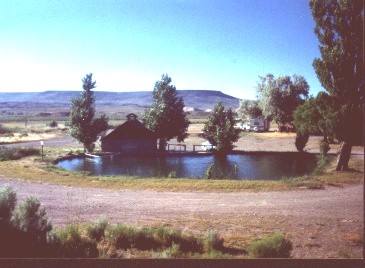
The
campground is free. There are about 20-30 sites. Outhouses are
available. No hook-ups, no electricity at the campground. Fire pits
and/or bbq pits are available. Sites with any type of shade are the
first to be taken.
Take
toilet paper. There is usually some available in the outhouse, but just
in case...
When you
use the outhouse, be careful of the contents of your pockets. I lost
some important prescriptions medications to the "pit".
The
ranger lives on adjoining property.
Remember,
there are no garbage facilities at the campground. You must pack out
what you pack in. There was, last time we were there, a dumpster at the
rest area about half a mile west of the campground, however.
The
campground is in the middle of an oasis and a wilderness/game preserve.
There is no firewood available locally to collect. If you want
campfires, bring your own supply of kindling and firewood.
The opal
mines are only accessible and open from May thru October. During other
months, the roads to and from the mines are inaccessible.
Temperatures
and weather during the open season (May-Oct.) range from one extreme to
another. Nights are always cold. Days are often hot. Dress in layers.
Bring a warm jacket and blankets. Be prepared for rain, thunderstorms,
and/or windy conditions, as well as lots of sunshine.
The
nearest gas station/market/bar (when it is open) is at least 30 miles
from the campground. Plan accordingly.
The
campground boasts an incredible hot spring, and warm running showers.
Bring your swimsuit and towels .
Bring a
flyswatter. The biting flies are persistent and obnoxious. Insect
repellent will help repel some of the smaller biting insects.
Bring
plenty of drinking water. It is usually available at the campground,
but it is highly mineralized and warm from the ground.
Bring
quart size Ziploc bags for storing and sorting specimens.
Apache
tears, (small obsidian nodules) are available near the campground. Some
are transparent, most take on a nice polish.
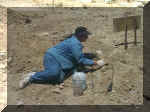 Some of the rocks
in the area show signs
of having been worked by the aboriginal peoples, who were also
attracted to the oasis with a hot spring, which has been there for
thousands of years. Some of the rocks
in the area show signs
of having been worked by the aboriginal peoples, who were also
attracted to the oasis with a hot spring, which has been there for
thousands of years.
The sun
and wind are two constants in this region. Be sure to bring sunscreen
(with a high SPF #), chap stick (the soft kind, not just the stuff that
feels like wax, and be prepared for it to melt), sunglasses, and
moisturizing lotion. A hat to
shade you from the sun works well, too.
Allow
some time for stargazing. Bring a telescope if you have access to one.
Shooting stars are incredible in this region.
Expect to
see lots of wildlife. Respect what you see.
Leave
nothing but good feelings behind you. This campground is a jewel in the
rough. We all want it to be there tomorrow.
Opal
Collecting tips:
Don't let
anyone try to convince you that the best opal in the world comes
exclusively from Australia. The nicest opal I've ever seen, I
personally saw collected at Virgin Valley, Nevada, from tailings.
A small
percentage of the opal found in Virgin Valley is valued at more per
carat than diamonds.
Some opal
lapidaries are reluctant to work opal from Nevada, since it has a high
water content and a reputation for crazing. This has not been a problem
among the Virgin Valley opal gatherers I know. I have seen black opal
with incredible red and green fire collected from a field in Virgin
Valley and lapped into a beautiful gem without any special treatment,
and it has not deteriorated. It is not a doublet or a triplet, either.
It is solid opal, and cut by a friend with (at that time) limited
lapidary experience.
Before
heading out, research the open mines in the area. Find out what the
fees are at the mine you plan to collect, and what those fees include.
Expect to pay anywhere from $25 a day, up to $100 or more per day. At
some sites, the fee includes the use of hand tools available at the
mine.
Some
mines have facilities for camping, most don't.
Many of
the mines are closed for one or two days per week. Check ahead.
Extraordinary
weather could make roads impassible. Use good judgment. Don't take
unnecessary risks, especially far from home.
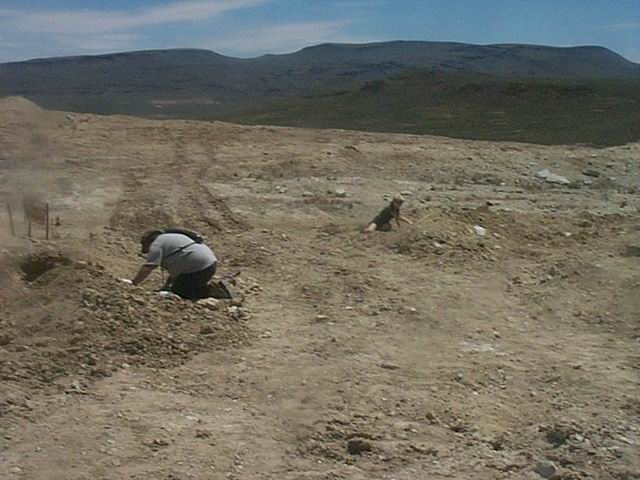
Different
techniques are appropriate at different mine sites. Some are hard rock,
requiring picks, hammers, shovels, hand trowels, etc. while some mines
allow access to tailing piles which have been bulldozed and spread over
a large area to be picked through.
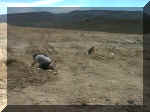 Look for mineral
specimens that are
glassy looking. The background color doesn't matter. Some of the most
beautiful opal doesn't show flashes of color immediately. Collect
everything glassy looking. Black glassy, clear glassy, milky glassy,
porcelain glassy, brown glassy, jelly glassy, etc. Unless you are
collecting by the pound, take anything you are interested in. Look for mineral
specimens that are
glassy looking. The background color doesn't matter. Some of the most
beautiful opal doesn't show flashes of color immediately. Collect
everything glassy looking. Black glassy, clear glassy, milky glassy,
porcelain glassy, brown glassy, jelly glassy, etc. Unless you are
collecting by the pound, take anything you are interested in.
Many of
the opal mines charge a flat fee to collect per day. If this is the
case, don't spend too much time in the field looking at individual
specimens. Bag them and go on. Special specimens can go into a special
bag or vial.
Don't be
afraid to collect specimens which do not show obvious opal, but are
otherwise glassy. Sometimes the fire appears later, after a good
soaking. Otherwise, the petrified wood is often worth collecting, in
its own right.
Take at
least one or two 5-gallon buckets along to bring back untouched "opal
dirt" from the fields, if permitted. It is fun to look for opals months
after the trip, in dirt that holds the same potential as the virgin
tailings from the mine.
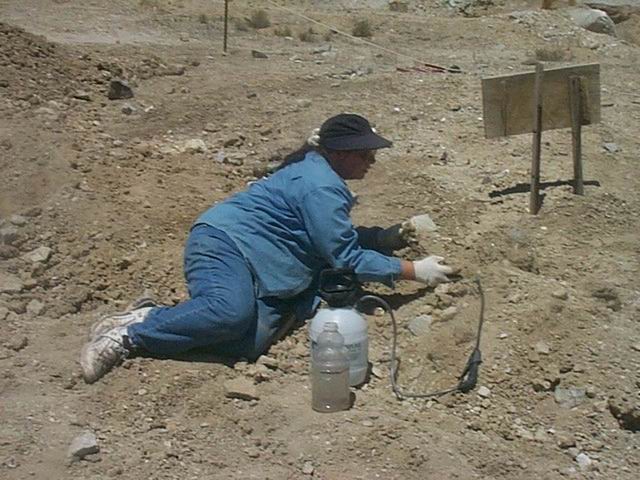
Take a
spray bottle full of water with you. A squirt from the spray bottle may
occasionally reveal incredible opals.
Sometimes,
good pieces of opal are covered with a white, chalky coating on the
outside, especially opalized limb casts.
Don't
search for opal in the shade.
Keep your
eyes open for other fossils and artifacts.
Take
advantage of any advice, displays, and or tools available at individual
mines. The information given freely by those who work the mine
professionally is valuable. Listen. Take any pamphlets or literature
offered.
Take the
time to look at samples of opal available at that particular mine. Look
at the specimens available for sale, the size, and the going price. Pay
attention to how they are displayed, also, in case you decide to show
off your Virgin Valley treasures.
Keep in
mind that opal from this region forms in two different geologic ways.
Most of the opal found in Virgin Valley is in the form of petrified
wood. Nearby, some of the opal is formed in small pockets in hard
volcanic rock.
Keep your
eyes and ears open. Frequently there are veteran opal hunters in your
midst. Many are happy to share advice.
Return
visitors are a good indicator of a good opal field.
Talk to
others you meet, especially ones with some opal hunting experience.
Find out where they go to collect and why they choose that spot ( if
they are willing to share that information).
If you
get an opportunity while in Virgin Valley, look at jewelry made from
locally collected opal. It is great for ideas for ways to put your own
opals to their best use. Even pieces the size of a match-head have been
made use of in some stunning ways.
Plan to
take a sack lunch and plenty of liquid refreshment while out in the
collecting fields. Water is more refreshing than most other drink
choices.
Rattlesnakes
and venomous insects are common in this area. Never reach into a hole
or under a rock without looking first. Keep a snakebite kit handy just
in case, and familiarize yourself on how to use it.
Anything
that resembles petrified wood should be carefully examined, and
potentially kept. Even if the opal is not precious, the petrified wood
may have value in its own right. The petrified wood specimen may also
contain precious opal which is not obvious at first.
Glass
jars with tight fitting lids are handy to put your freshly collected
opals into, once the opals have been thoroughly rinsed till the water
runs clean and clear. The jars are filled with water and opal, where
the water serves to make the colors inside the opals more visible,
especially in sunlight.
Once you
have spent a day with your nose to the sand, searching for one more
piece of that incredible opal, you will understand the lure and
satisfaction of an opal hunter.
Hope we
see you there!
|